Building GTM Systems with AI
At Matik, I built AI workflows for competitive intelligence, customer research, outbound personalization, and content production. They connected tools including Gong, Slack, and Gumloop to turn source material into recurring alerts, sales inputs, and content drafts. Human review remained part of the publishing workflow.
My Approach
Most PMM work treats AI as a shortcut to the same output people already made by hand. I treat it as an operator, something with defined inputs and a job to do, that keeps working after I've moved on to something else. Building one means wiring tools together through MCPs and webhooks so data actually moves between them, then testing and rewriting prompts until the output holds up on its own.
The real work is in the handoffs: making sure Gong feeds Slack correctly, that a scraped signal becomes a prioritized alert instead of noise, that a personalization prompt degrades gracefully when the data it needs isn't there. The systems below are what that looks like running in production.
AEO Content Pipeline
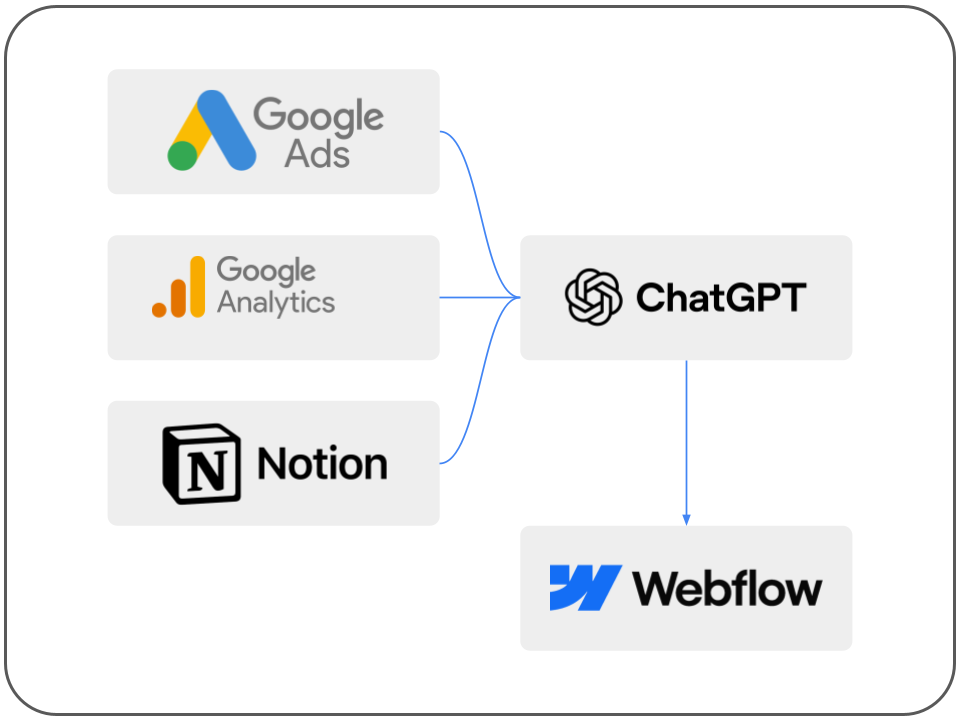
AEO was becoming impossible to ignore as a discovery channel, so I built a working system to capture it. I coordinated with Demand Gen to feed keyword intent signals into an AI trained on our writing style guide and E-E-A-T standards, then had it draft content the marketing coordinator reviewed and published, filling gaps without adding to my own workload.
Two months in, I analyzed the results: AI traffic was spiking independently of other channels, confirming the reach was genuinely incremental, with ChatGPT driving roughly 70% of it. The system kept running and filling content gaps long after I moved on to other priorities.
Voice of Customer
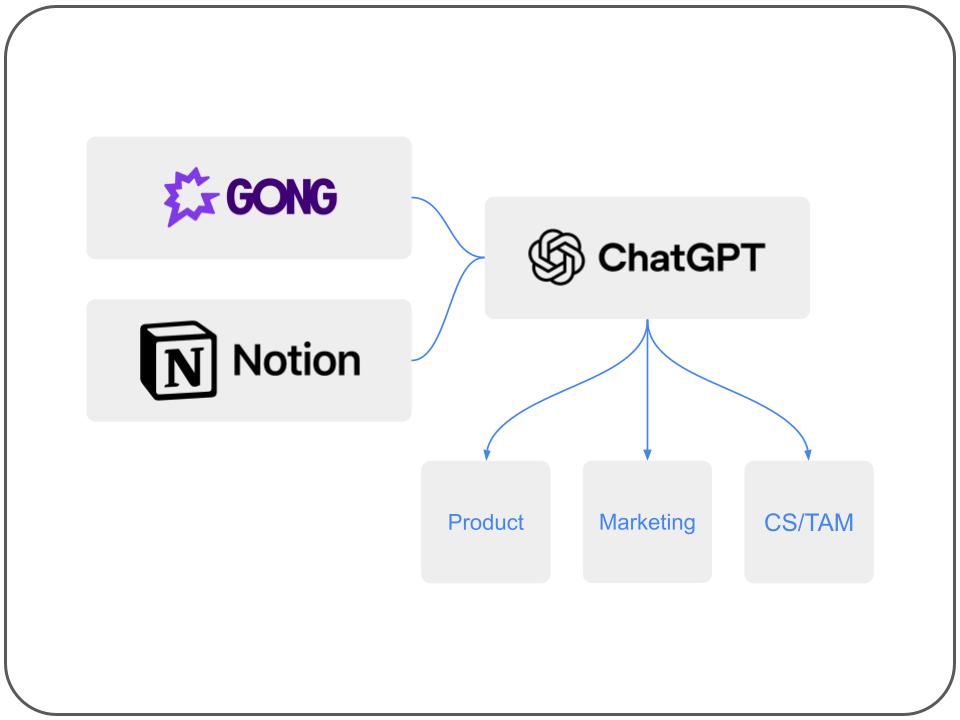
Customer calls in Gong held constant signal on brand perception, feature gaps, renewal risk, and competitor mentions, but nobody had time to comb through them systematically. I built an automation that scanned every call for those four categories and had AI sort the findings.
Renewal risk went to Product for roadmap input, feature feedback fed customer programming like webinars and nurtures, and recurring pain points became in-app guidance that helped customers get more value on their own. It turned a library of unreviewed calls into a standing feedback loop between customers, Product, and Marketing.

SFDC Email Personalization at Scale
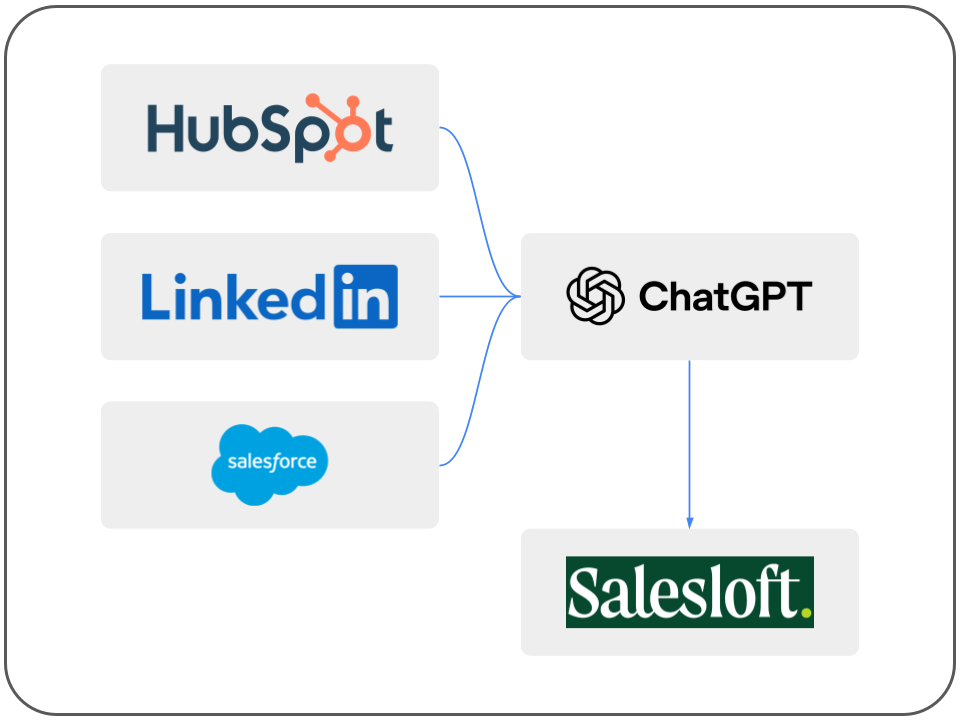
SDRs already knew that hyper-personalized openers referencing a prospect's job change, tech stack, or recent content download outperformed generic templates. The problem was that researching each prospect by hand only worked for the warmest leads.
I connected Salesforce, a LinkedIn scraper, and HubSpot engagement data into a prompt built on SDR personalization best practices, generating three ready-to-use openers per prospect that auto-populated directly into Salesloft. Reps picked one and sent it, no manual research required. Open and reply rates on outbound climbed, and personalization stopped being something only a handful of accounts ever got.
Automated Comp Intel
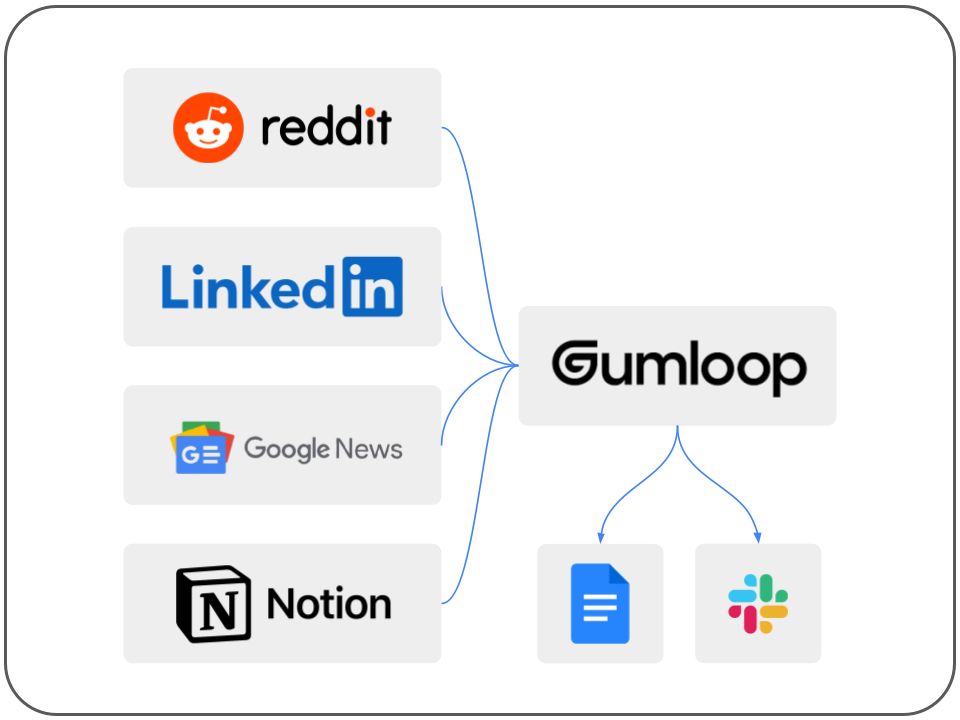
Competitive intelligence at Matik was a manual process that only happened when someone had time, which in practice meant quarterly at best. I built a no-code system in Gumloop that connected our positioning docs, a list of competitor URLs, scrapers for LinkedIn, Reddit, and Google News, and Gong's call data to catch when competitors came up in AE and SDR conversations.
The system analyzed all of it, delivered a weekly summary, and flagged high-priority signals, like a competitor's new feature encroaching on our positioning, straight to Slack so we could react the same week instead of the same quarter. Comp intel went from something we did when we remembered to something running continuously in the background.