Positioning AI in a Saturated Market
Building differentiated AI positioning and GTM strategy that improved sales confidence and drove high-quality campaign engagement.
The Challenge
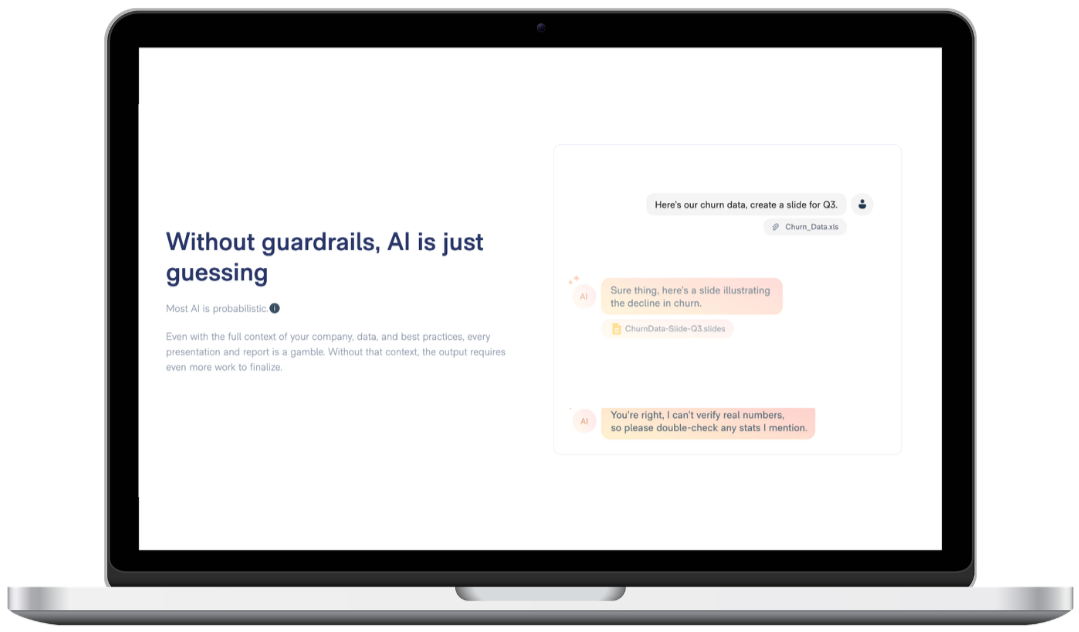
By mid-2025, AI had become table stakes across B2B SaaS, but most implementations felt like shallow "AI wrappers" rather than thoughtful product integration.
Matik had three solid AI features, but lacked a cohesive narrative that explained why they were different and how they worked together.
Sales teams were struggling to confidently position AI against skeptical prospects, and the market was saturated with generic "we have AI too" messaging.
What I Owned
Product requirements & behavior
Researched 5 competing B2B SaaS AI agents, then authored a Marketing Requirements Document that shaped how the AI would behave, what it would say, and how it would interact with users
Campaign execution
Designed and tested ad creative and messaging across LinkedIn and Reddit, identifying which pain points resonated most with buyers
Positioning & messaging
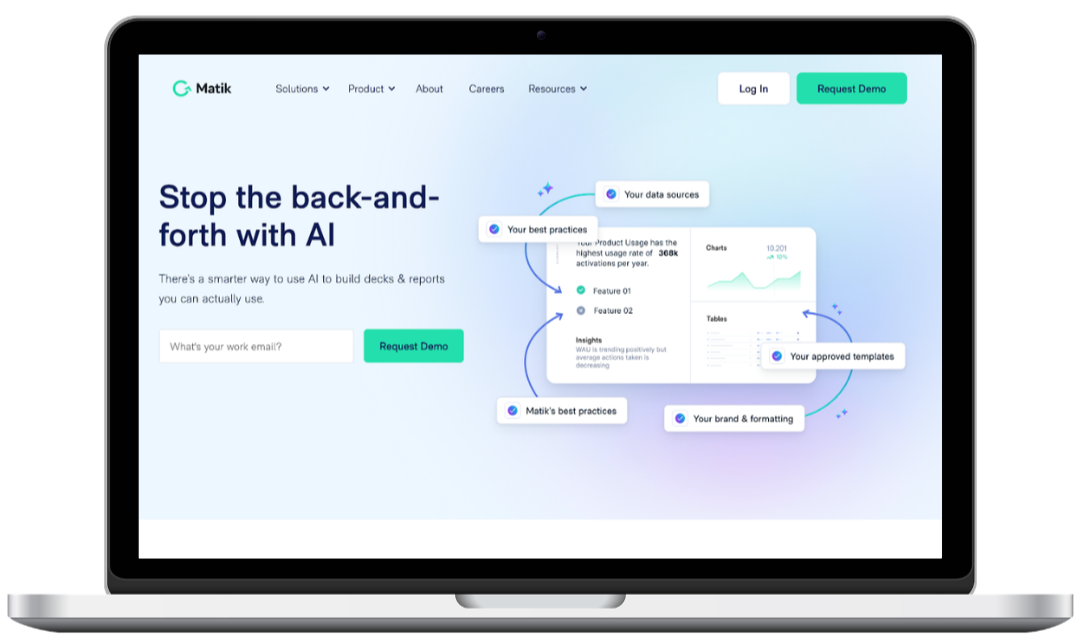
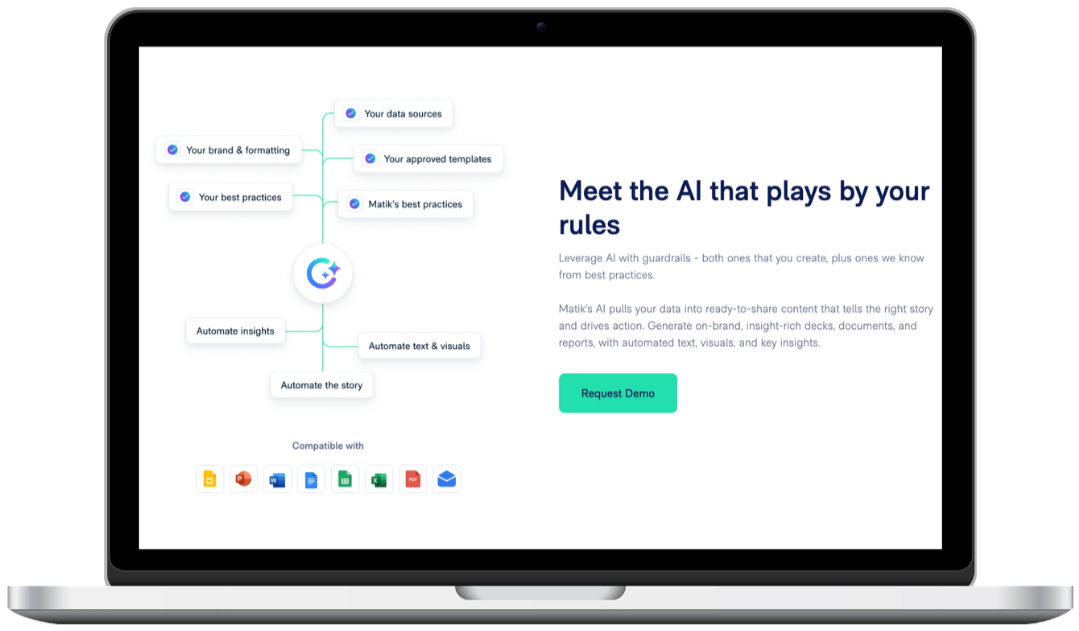
Built the "AI with Guardrails" narrative, positioning Matik's AI as trustworthy and accurate by directly addressing market fears rather than ignoring them
Sales enablement
Trained Sales, SDRs, and Account teams on how to demo, explain, and confidently sell the new AI capabilities
Impact
Sales confidence
The "AI with Guardrails" positioning gave SDRs a clear, defensible narrative that effectively addressed common objections and bolstered their credibility
High-quality traffic
Majority of campaign traffic came from strategic directory partnerships, which showed lower bounce rate vs paid social, proving the positioning attracted genuinely interested buyers, not just ad-click traffic
Campaign engagement
Landing page bounce rate of significantly lower than site-wide, indicating strong message-market fit
Messaging validation
Messaging tests revealed consistent preferences for specificity and pain-point framing ("AI generating gibberish," "making wrong assumptions") over abstract or adversarial positioning
Key Takeaway
In crowded markets, differentiation is about addressing what buyers actually fear more than just having the newest feature.
By reframing AI skepticism into a competitive advantage (positioning accuracy and control as features, not apologies), we moved the conversation from "does your AI work?" to "why should we trust yours?"